
Kimbap Is Said to Be One of The Korean Favorite Dish.
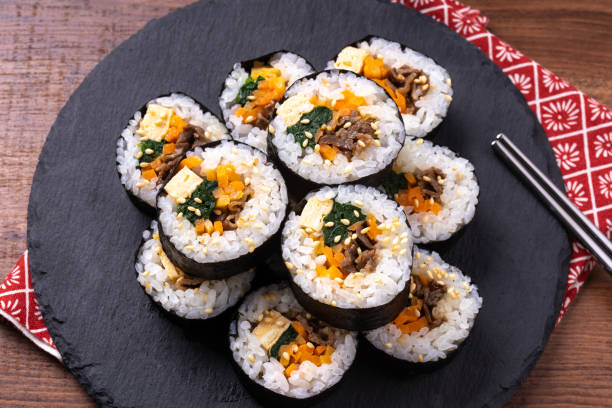
The preparation of kimbap involves a dance of colors and textures. Begin by laying out a sheet of seaweed, called gim, on a bamboo mat. Spread a layer of seasoned rice over it, a canvas waiting to be adorned. Now comes the exciting part – choose your fillings. From savory bulgogi (marinated beef) to crisp vegetables like carrots and cucumbers, the options are diverse. Roll it all snugly, and the magic of kimbap begins to unfold.
Serving kimbap is a visual treat. The rolled masterpiece sits patiently, ready to be sliced into bite-sized circles. The vibrant cross-section reveals a mosaic of ingredients, a testament to the harmony within. Arrange the slices on a plate, and you have a feast for the eyes and the stomach.
Kimbap's charm extends to its communal serving style. Often, it's prepared in abundance and shared among friends and family. Picture a gathering where a platter of kimbap takes center stage, inviting everyone to partake in the joy of its flavors. It's more than a meal; it's a shared experience.
Accompanying kimbap is a dipping sauce, typically a blend of soy sauce and sesame oil. Dip a piece of kimbap into this umami-rich elixir, and you're transported to a realm where every flavor finds its perfect match.
In essence, kimbap is a celebration on a plate. Its preparation is a labor of love, and its serving is a communal affair. From the kitchen to the table, kimbap weaves a tale of comfort, connection, and culinary delight.